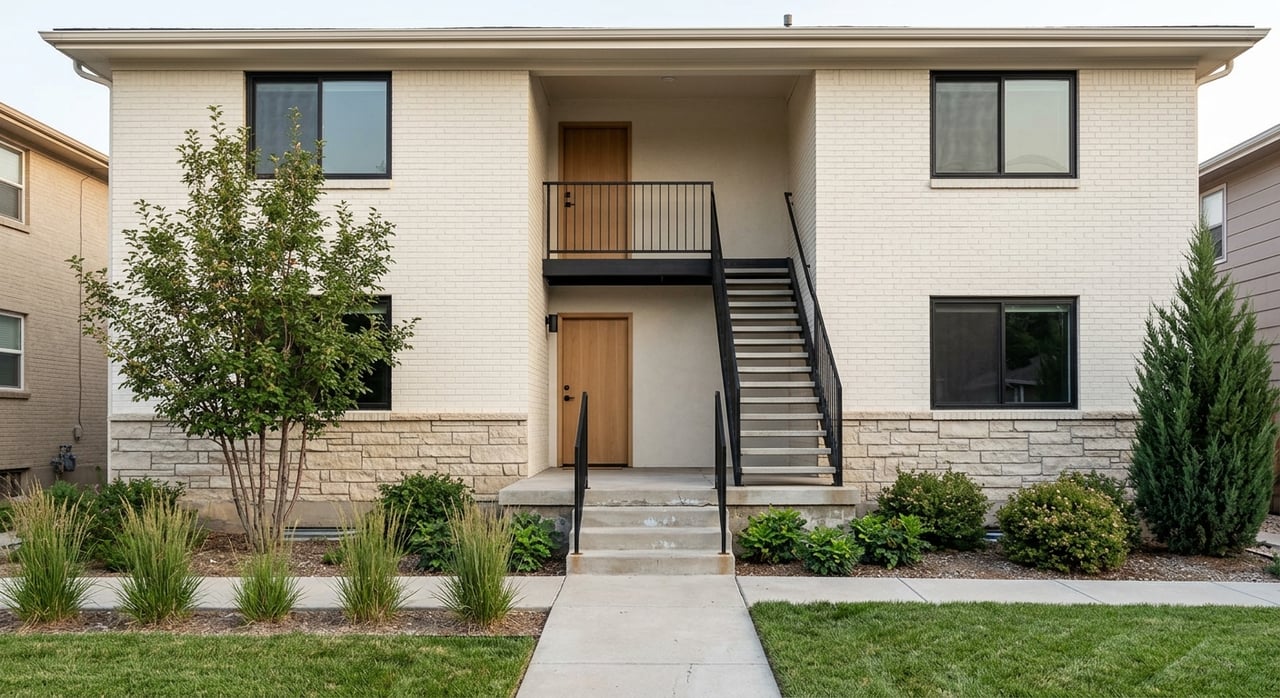
Arvada Small Multifamily Investing Opportunities
June 25, 2026
June 25, 2026
Looking for a small multifamily opportunity in Arvada can feel a little tricky at first. Most of the housing stock is still single-family, but that does not mean income-producing options are off the table. If you want to buy smart, understand where the real opportunities are, and avoid costly zoning surprises, this guide will help you focus on what matters most. Let’s dive in.
Arvada is still largely an owner-occupied suburban market. The U.S. Census Bureau reports a 75.3% owner-occupied housing rate, with a median value of owner-occupied homes at $632,600, median gross rent at $1,888, and median monthly owner cost with a mortgage at $2,564.
That matters because it shapes what kind of small multifamily deals tend to make sense here. In a market where detached homes dominate, the best opportunities often come from properties with built-in flexibility, value-add potential, or owner-occupant appeal.
The City of Arvada’s 2024 Housing Needs Assessment reinforces that point. Nearly 71% of housing units are detached single-family homes, and the report notes that Arvada has a higher share of single-family housing than Westminster and Lakewood.
At the same time, the city is actively planning for more housing diversity. Arvada’s 2024 Housing Strategic Plan ties future supply growth to land-use and zoning changes intended to increase housing variety and affordability.
If you are searching in Arvada and nearby suburbs, small multifamily does not just mean a classic duplex or fourplex. In practice, your options may include duplexes, multiplexes, mixed-use-adjacent housing forms, and single-family homes with accessory dwelling unit potential.
That broader view is important because Arvada’s parcel-specific zoning can create opportunity in places that might not stand out at first glance. A property may look like a standard house from the street while offering legal room for an added income unit or a different residential form.
For many buyers, the most practical path is not always buying a ready-made multifamily building. Sometimes it is buying a property with the right legal setup for future flexibility.
In Arvada, accessory dwelling units are one of the clearest house-hack opportunities. The city allows ADUs in all residential zone districts on lots with an existing detached single-family home.
Arvada recognizes two ADU types. Type A is detached, while Type B is attached or internal to the main home.
This can open the door to several strategies, depending on the property. You may be able to create separate living space for rental income, multigenerational use, or added flexibility over time.
That said, ADUs are not a simple add-on. The city sets size limits based on lot size and the size of the primary home, requires licensed contractors, requires separate certificates of occupancy, and requires utility connections through the principal dwelling.
If you want an income property that is already set up for multiple households, existing duplexes and multiplexes can still be attractive. The key is confirming that the current use is legal and matches the zoning and public records before you move forward.
Arvada’s zoning rules vary by parcel and district. In the R13 district, single-family detached homes are allowed by right, duplexes are limited, and multiplex and multifamily uses are allowed by right.
In the RN district, duplexes are limited to the RN-D subdistrict. In the MX-N and MX-U districts, duplex, townhome, multiplex, and multifamily uses can be allowed conditionally.
Because the city also states that uses not listed are not allowed in a district, assumptions can get expensive fast. A home marketed casually as having “income potential” is not the same as a legally established multifamily property.
Olde Town Grandview is worth watching because it includes a mix of residential form types. According to the city, the district includes single-family dwelling, duplex, and multiplex form types.
That can make this area feel different from Arvada’s more traditional single-family neighborhoods. If you like older urban-edge blocks and want more variety in building form, this district may offer options that are harder to find elsewhere in the city.
If your search is flexible, it helps to compare Arvada with neighboring suburbs rather than limiting yourself to one city. Arvada’s housing stock remains more detached-home-heavy than some nearby communities, so your small multifamily options may be more limited block by block.
Westminster and Wheat Ridge are useful examples of how nearby suburbs can differ. Westminster’s ADU guidance allows one ADU per primary dwelling, whether it is within, attached to, or detached from the main home, and notes that it cannot be sold separately without subdivision.
Wheat Ridge also identifies ADUs as a building-permit item and has a duplex-split process. The larger takeaway is simple: similar housing types can follow different local rules depending on where you buy.
That means a strong opportunity in Arvada may look different from a strong opportunity in Westminster or Wheat Ridge. The best fit depends on your goals, your budget, and how much development or renovation work you want to take on.
When you evaluate a small multifamily purchase, it helps to start with realistic rent framing instead of optimistic projections. In Arvada, the citywide median gross rent is $1,888.
HUD’s FY2026 Fair Market Rents for the Denver-Aurora-Centennial MSA provide another reference point: $1,754 for a one-bedroom, $2,089 for a two-bedroom, $2,734 for a three-bedroom, and $3,049 for a four-bedroom. Because these figures are used as rent-ceiling standards for voucher and related programs, they are better used as conservative benchmarks than as direct market averages.
Arvada also frames affordability using the common standard that housing costs should be about 30% of gross income. That is useful because it reminds you to view rent potential through the lens of what households can reasonably support, not just what a spreadsheet hopes to show.
There is also an important cost reality in the public data. Arvada’s median monthly owner cost with a mortgage at $2,564 is meaningfully above the median gross rent of $1,888.
For many buyers, that means a deal may work best when at least one of these conditions is present:
Rent is only one side of the equation. Before you commit to a property, you also need a clean view of taxes, permits, and any property-specific issues that could affect future plans.
In Jefferson County, the assessor determines property value, the treasurer collects taxes, and mill levies are set by taxing authorities. The county’s property-records search can be used to review owner information, address details, parcel ID, sales, subdivision, neighborhood, tax district, and tax authority.
That public data can be especially helpful when you are comparing two similar-looking opportunities. One may have a cleaner ownership and tax picture, while the other may come with more uncertainty.
Jefferson County also notes that its assessor does not determine property boundaries. If boundaries are in question, a surveyor or legal advice may be needed.
This is where careful prep can protect you. Before writing an offer on a small multifamily or ADU candidate, use public tools to confirm what the property really is.
Arvada offers official zoning verification, and Jefferson County provides parcel maps and recorded-document searches. Together, those resources can help you check whether a property is truly a duplex, whether it may be a legal ADU candidate, or whether it is simply a single-family home with possible expansion potential.
A practical verification checklist includes:
The HOA point matters more than many buyers expect. Arvada still advises applicants in HOAs to seek HOA approval, but Colorado’s 2024 ADU law says association declarations, bylaws, or rules in subject jurisdictions may not restrict ADUs in ways prohibited by state law.
That is why you should review both the current city code and HOA documents together rather than relying on one source alone.
A property can be legal on paper and still be a weak fit for your goals. Neighborhood context matters, especially if your long-term plan includes resale, future improvements, or adding an ADU.
Arvada’s 2024 housing assessment found that nearly half of surveyed residents thought multifamily homes could be appropriate in their neighborhood. That suggests neighborhood fit is often about design and scale, not just whether a property has more than one unit.
When you evaluate an area, pay attention to the surrounding housing pattern. A block with varied forms may support a different opportunity than a block made up almost entirely of detached homes with little visual or functional flexibility.
Some deals are straightforward. Others depend heavily on zoning interpretation, unit legality, ADU feasibility, or neighborhood-specific resale risk.
That is when experienced local guidance becomes especially valuable. Arvada’s ADU process requires permit review and licensed contractors, and Jefferson County is clear that surveyors or legal counsel may be needed when property lines are unclear.
If your numbers only work if a second unit is legal, rentable, or buildable, do not treat that as a detail to sort out later. Make it part of your decision process from the start.
Arvada’s policy direction is not simply to hold the line against added density. The city’s housing strategy is aimed at unlocking supply and improving housing diversity through land-use and zoning changes.
For buyers and small investors, that creates a practical lens for opportunity. The strongest properties are likely to be the ones where legal use, neighborhood context, and value-add math all line up.
In today’s market, that may mean focusing less on finding a perfect turnkey fourplex and more on identifying flexible properties with solid fundamentals. In Arvada and nearby suburbs, that often includes ADU-ready homes, legally established duplex or multiplex properties, and locations where the surrounding housing pattern supports a broader range of residential forms.
If you want help sorting through Arvada small multifamily options, comparing nearby suburbs, or pressure-testing a property before you write an offer, Lynda Chrisp can help you evaluate the details with a clear local perspective.
Stay up to date on the latest real estate trends.


With over 11 years of experience in the Denver real estate market, Lynda provides expert guidance, personalized service, and strong negotiation to help you achieve your real estate goals.