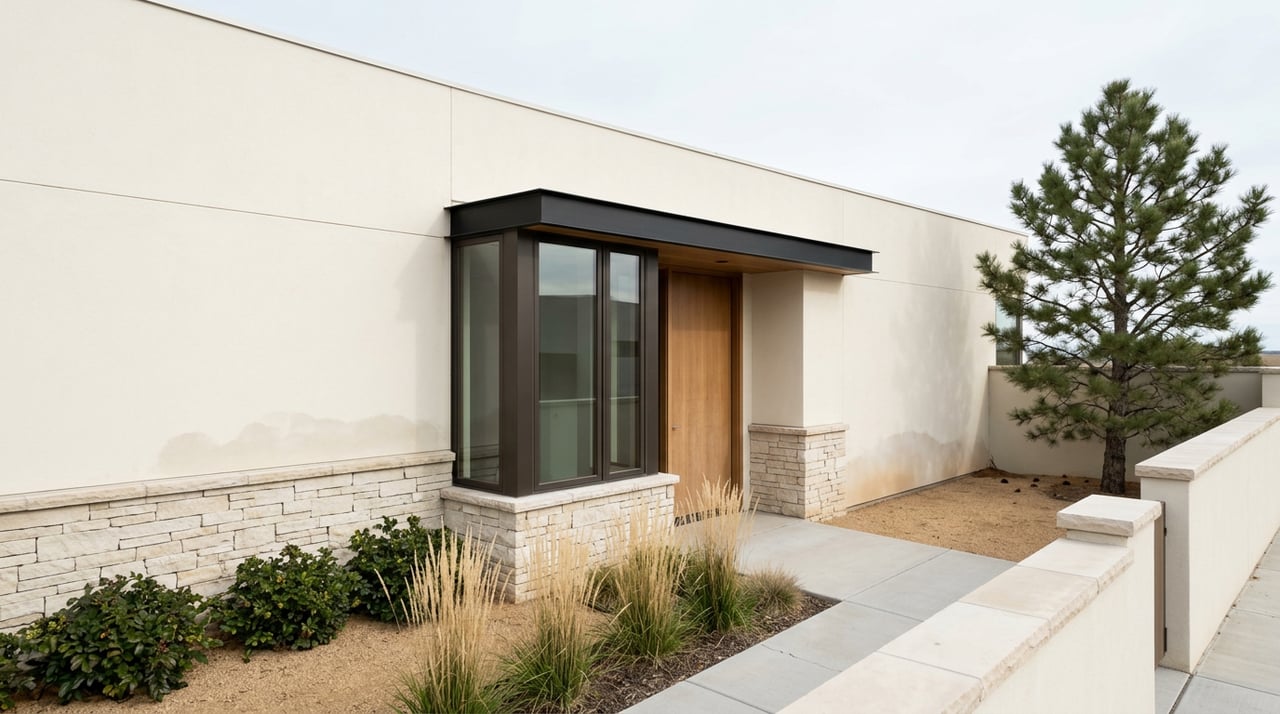
Superior Colorado Home Prices: The Marshall Fire Rebuild Effect
September 17, 2026
September 17, 2026
Pull up two different housing data sites for Superior, Colorado right now and you'll get two different stories. One says the median sale price jumped nearly 18 percent over the past year. The other says the average home value is down slightly over that same stretch. Both numbers are current. Both come from real transaction data. And both are true, which is the part that trips people up.
This isn't a data error. It's a composition problem, and in Superior it has a very specific, very local cause: the Marshall Fire.
Over the three months ending in May 2026, the median sale price in Superior sat at $967,000, up 17.9 percent from the same period a year earlier, with homes going under contract in about 30 days compared to 53 days the year before. Meanwhile, a separate home-value index for the town put the average home value at $832,589 as of late June 2026, down 2.2 percent over the prior twelve months.
If you're comparing Superior to Lafayette, Broomfield, or another Boulder County suburb using whichever number you happened to click first, you're not wrong to be confused. The honest answer is that neither number is describing "Superior homes" as a single, stable category anymore. They're describing a town where a meaningful share of the housing stock is brand new, and the rest is not, and those two groups are pulling the average in opposite directions.
The Marshall Fire destroyed or damaged more than 1,000 homes across Louisville, Superior, and unincorporated Boulder County that day. As of the county's recovery dashboard update from December 2025, the official count stands at 1,109 homes destroyed. Superior itself lost 391 homes and three businesses.
The Sagamore subdivision, tucked behind the town's Costco, lost every single one of its homes. Sagamore's lots run about 3,000 square feet, roughly half the size of a typical Superior lot, packed close with no HOA governing what gets rebuilt. That combination, small lots, no design review body, high demand, is exactly the setup that produces a fast wave of new construction once permitting clears. And it did.
According to a count reported in early 2024, Superior had issued 271 rebuild permits and seen 118 homes completed. Those aren't renovations. They're new builds, on cleared foundations, built to current code, often larger and more finished than what stood there before.
Here's where the composition problem shows up in the numbers. An early 2024 analysis in ColoradoBiz found that new homes built on burned Superior and Louisville lots were selling for upwards of $600 per square foot, while homes that survived the fire and were simply remodeled were trading around $450 per square foot. That's not a small gap. It's the difference between a builder-grade rebuild with modern finishes and code-required fire resiliency features, and a 1970s or 80s home that just got new counters and paint.
Now compare that to Superior's current citywide median of $359 per square foot as of the three months ending May 2026. That number sits well below the rebuild premium, which tells you something useful: the $600-a-foot rebuilds are still a minority of total transactions, high-visibility but not yet the majority of the stock. As more of them close, especially in a compressed window, they can swing a median price upward even while the broader base of ordinary resales holds flat or softens, which is what the Zillow-style average is likely picking up.
In practical terms, if you're watching Superior's median price climb and assuming your dream three-bedroom ranch just got 18 percent more expensive, you're probably reading a rebuild story, not a citywide one.
Not every burned lot became a new house. As of December 2024, Boulder County's recovery and resiliency team had tracked nearly 200 lots that sold rather than rebuilt, most of those sales signaling a permanent departure from the neighborhood rather than a pause before rebuilding.
The reason traces back to insurance. At least two-thirds of affected households faced coverage gaps, with the average shortfall exceeding $100,000, according to Colorado's Division of Insurance. Only 76 of the 951 total-loss claims filed in 2022 carried guaranteed replacement cost coverage, meaning the large majority of homeowners were handed a check that didn't fully cover what it actually cost to rebuild in a tight Boulder County construction market.
That gap is part of why the rebuild stock skews upscale. Underinsured owners who couldn't close the gap sold their lots, often to builders and investors who could absorb the higher construction costs and build to the top of the market. The homes that came back were frequently larger and pricier than what they replaced, which is a pattern the county's own recovery staff has observed directly in the neighborhoods most affected.
The Town of Superior has been candid about what this shift cost the community. Renae Stavros, the town's planning and building director, put it plainly to Denver7 in late 2025:
"Historically, our original town was the more affordable area of town. But we lost all of it to the Marshall Fire."
Those original homes near town hall dated to the 1930s through 1960s, naturally affordable simply because they were old and modest. Once gone, Stavros said, the land under them costs far more, and building anything on it costs more too. In the same Denver7 report, she said: "Affordable housing in Superior, as of today, doesn't really exist."
The town isn't standing still on this. Superior received $225,000 through Colorado's first-ever ADU grant program, matched with $75,000 in town funds, to encourage accessory dwelling units as a lower-cost way to add housing on existing lots. About 50 units of income-restricted senior housing are also set to begin construction in 2026.
Separately, Impact Development Fund has acquired eight infill lots in Superior and plans to begin building single-family homes there in 2026, aimed at households earning 100 to 120 percent of the area median income, with outreach specifically targeting Marshall Fire survivors who haven't been able to return. A related project called Kite Route Crossing, funded in part through the final distributions from the Boulder County Wildfire Fund announced in February 2026, is set to become the town's first income- and age-restricted housing community when it opens in 2027, with preference given to households displaced by the fire.
None of this changes what's for sale on the open market today, but it tells you where Superior's housing mix is headed over the next two to three years: more subsidized and age-restricted product at the affordable end, alongside continued market-rate rebuilds at the top.
| Original Superior homes (pre-1990s) | Post-fire rebuilds | |
|---|---|---|
| Typical era | 1970s-1980s, some 1930s-1960s | 2022-2026 |
| Construction code | Older energy and fire code | Current code, added fire-resiliency requirements |
| Price per square foot | Below the $359 citywide median | Historically around $600, per 2024 reporting |
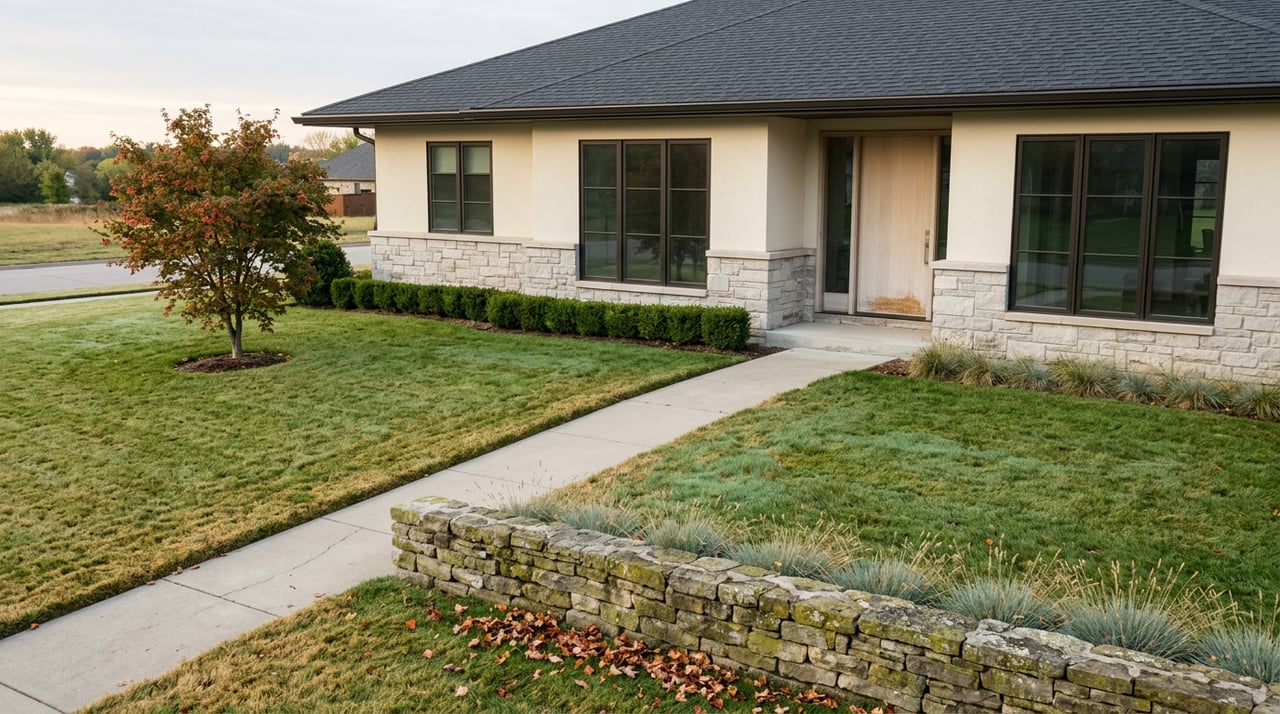
| Lot character | Established landscaping, mature trees | Often newly graded, some retaining walls added |
| Where concentrated | Scattered older subdivisions | Sagamore and other burn-area subdivisions |
If a portal search shows Superior's median price outrunning Lafayette's or Broomfield's, don't take that as a verdict on the whole town. Ask what's actually in that median. A rebuild-heavy month will read differently than a month dominated by resales of untouched older homes.
A few habits help here:
Does a rebuilt home in Superior come with any lingering issues from the fire? Rebuilds went up under current code with added fire-resiliency requirements, and most sit on cleared, permitted lots. Ask your inspector about any retaining wall work, since steep or reshaped lots sometimes needed structural additions that weren't part of the original property.
Is every home in Sagamore new construction now? Not entirely. Some lots sold and were rebuilt, some sold and remain vacant, and the pace of individual owner decisions means the subdivision is still a mix. Verify year built on any specific listing rather than assuming based on the neighborhood name.
Will Superior's affordable housing projects affect resale value nearby? It's too early to say with certainty. Kite Route Crossing and the Impact Development Fund homes are aimed at a different buyer than most market-rate listings, and neither is complete yet.
If you're trying to make sense of what a specific Superior listing is really worth, or how it stacks up against a comparable home in a neighboring town, that's exactly the kind of read where a local, transaction-by-transaction perspective matters more than a portal's headline number. Lynda Chrisp has spent more than a decade working Boulder County and the wider Denver metro market, and can walk you through what a given Superior address is actually built on, and what it's actually worth. Let's Connect.
This article is general information, not legal, tax or financial advice. Consult a qualified professional about your situation.
Stay up to date on the latest real estate trends.


With over 11 years of experience in the Denver real estate market, Lynda provides expert guidance, personalized service, and strong negotiation to help you achieve your real estate goals.